


Is Bouldering Safe for Beginners?


Written by: Kenzie Bicher
What about bouldering scares you? Heights. Not knowing what you’re doing. Feeling unsure of yourself. Looking foolish. Falling. Whatever it is, being uncertain is normal. It might even be the point. That edge of fear keeps us engaged, mentally and physically.
Climbing is a vertical puzzle. The wall asks something from nearly every muscle in your body, from the tips of your toes to your fingertips, while your mind solves the sequence in real time. It’s fun. It’s playful. It’s a full-body, full-mind effort. And yes, it carries some risk.
Here’s the good news: that risk is something you can work with, not just around.
Misconceptions vs. the Modern Gym
Heights can feel unsettling. A room full of confident climbers can feel intimidating. Both reactions make sense, but neither matches what you’ll actually find inside a modern Bouldering Project.
Bouldering Project designs every detail of our space around one idea: you should feel like you belong here from the second you walk in. A true third place.
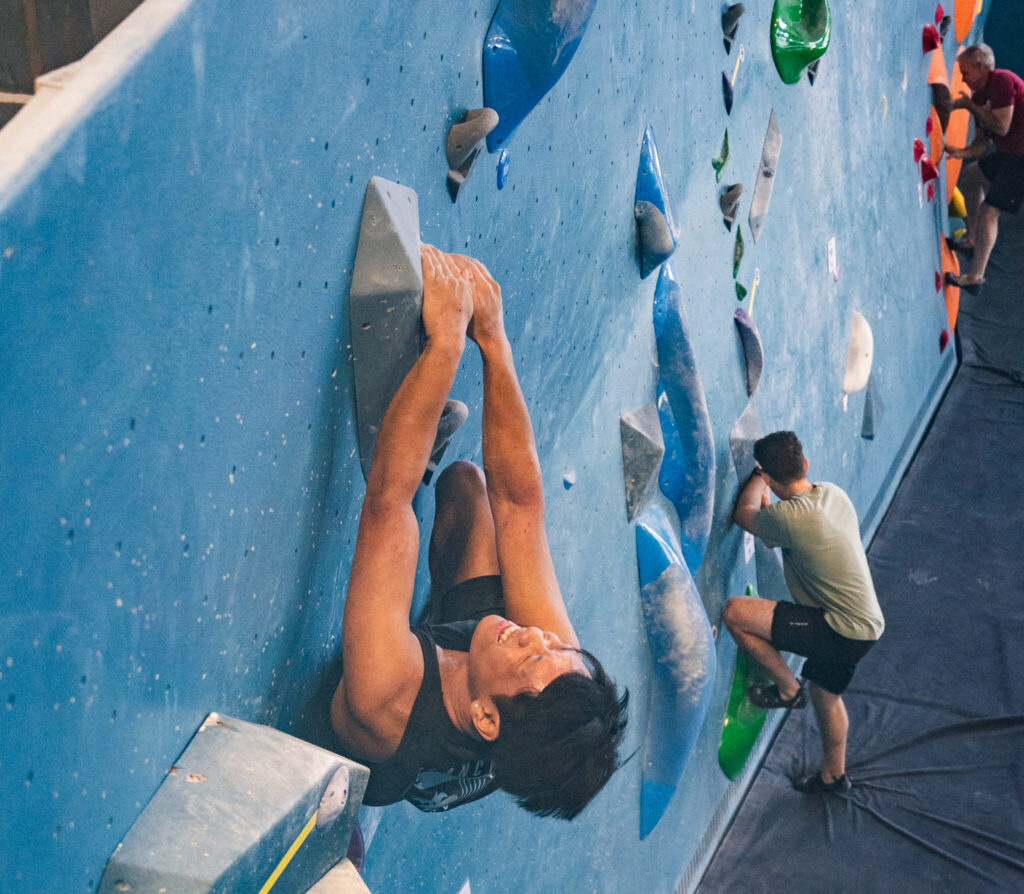
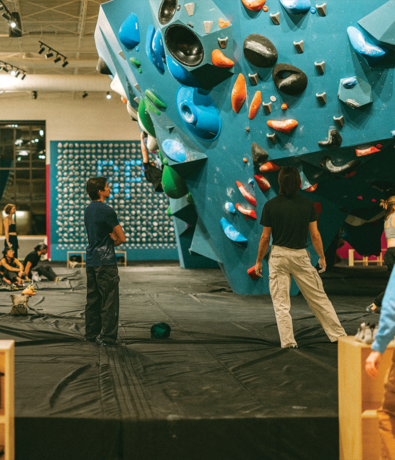
And the walls themselves are built with that edge in mind: typically 13 to 15 feet. Low by design. That’s not an accident of architecture – it is our risk management built into our foundation. The walls take us just over our edge, pushing the feeling of a high height sensation without introducing an opportunity for a serious fall risk.
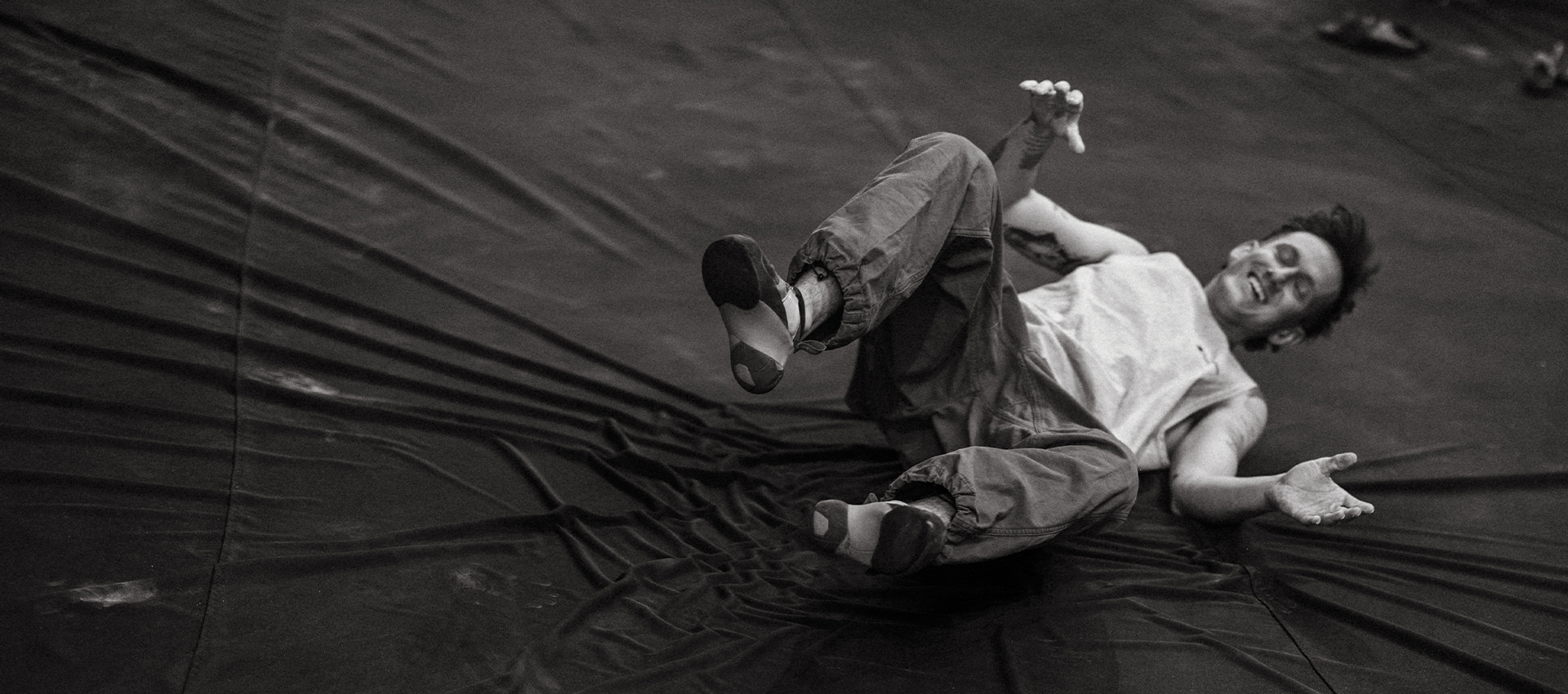
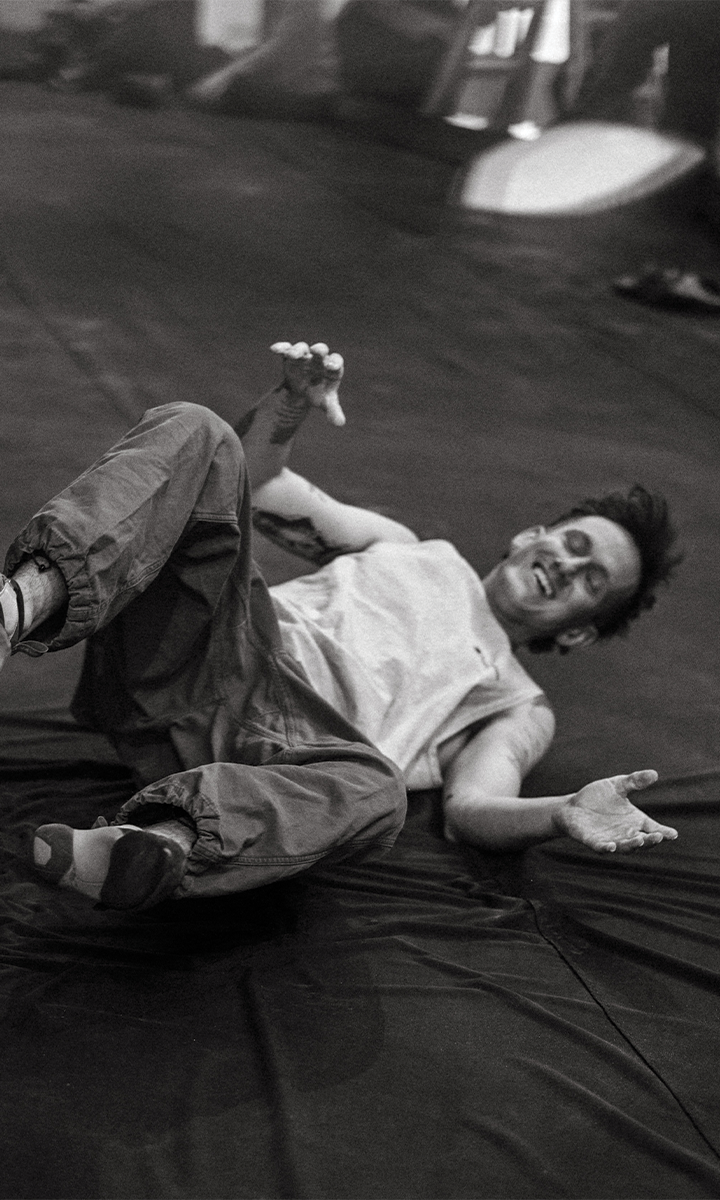
Falling isn’t a failure in bouldering. It’s built into the sport. That’s why high-density foam padding covers our entire floor, engineered to absorb force and distribute it evenly. Finding your edge often means trusting the pad underneath you, reaching for that hold you may not grip. Your growth as a climber and athlete is in that edge.
Falling 101
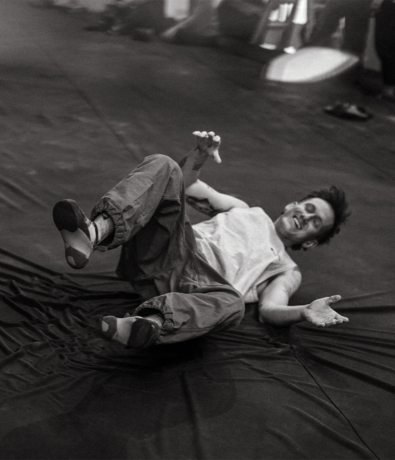
Falling is inevitable. Mastering the fall is part of mastering the climb. It doesn’t have to be scary, because you’re in control on the way up the wall, and on the way down. The real shift happens when you separate intentional falling from reactive falling.
How to fall when bouldering in a gym:
-
- Pull your arms in close. Tucked arms keep your fingers and wrists out of the fall’s way.
- Land on your feet, knees soft, not locked. A soft knee absorbs the landing. A locked one passes that force straight up your body.
- Roll backward, smooth, onto the mat. This is what the pad is for. Let it catch you instead of catching yourself.
-
- Tuck your chin to your chest. This ensures that your head doesn’t slap against the pads when you land.
Here’s a great technique climbers use: plan and practice your fall. If there’s a sticky spot in a route that scares you, watch the climbers around you. How are they moving past that hold? Mentally rehearse your fall. Picture acing your fall – holding your arms close, knees soft, landing on your feet, rolling back smooth onto the mat. Then climb straight to that spot and make the fall you imagined a reality. Deliberately. It gives your body a practice rep, and it shows your mind the fall is doable, because you just did it.

Risk Management as a Community
You’re solving your own puzzle up there. But you’re never doing it alone. That’s the idea behind Alone Together. That’s our take on shared space and shared responsibility.
A few rules that keep it that way:
- Never walk underneath an active climber.
- Keep fall zones clear, even if it costs you a few seconds.
- No water bottles, no hard items, on the mats.
If you want to build that awareness faster, take an intro to bouldering course, or simply ask the climbers around you. Our group classes pair you with other beginners learning the techniques right alongside you, guided by a dedicated coach. There’s something genuinely reassuring about learning a new sport in that kind of company: you’re not alone, and you’ve got real-time feedback from the best as you build your foundation.
What to Expect Your First Time?
Still not sure? Here’s what walking in for the first time actually looks like:
- Arrive a little early. Take the orientation seriously — it covers exactly what you need.
- Watch before you climb. A few minutes of observation demystifies a lot.
- Start low. Practice falling before you push your limits.
- Ask questions. Freely, often. That’s what the staff are there for.
Want the full breakdown? Check out our guide to getting started with indoor climbing.
Embracing Challenge
A fulfilling life usually means choosing intentional challenges instead of staying in your safe zone. Bouldering hands you exactly that: a structured way to test your edge, in a space built to literally catch you when you fall. Swing by. Grab a tour. Meet our people. Catch a vibe. We can’t wait to spread the infectious love we have for climbing.
Climbing Gyms vs. Traditional Gyms: Why Fitness is Shifting to the Pads
Written by: Anne Riddle-Cruz Rock climbing gyms have exploded in popularity over the last decade, not only because climbing...
Is Bouldering Safe for Beginners?
Written by: Kenzie Bicher What about bouldering scares you? Heights. Not knowing what you're doing. Feeling unsure of yourself. Looking...

The Best Active Things to Do in Brooklyn
Written by: Anne Riddle-Cruz Movement In The Borough: The Best Active Things to do in Brooklyn For New Yorkers and...
A Weekly Training Routine for Climbers (Including Yoga)
Written by: Anne Riddle-Cruz Step Into the Lab: A Balanced Weekly Training Routine for Climbing You can learn a lot...
How to Choose the Right Climbing Gym in Your City
Written by: Kenzie Bicher Any good climbing gym is a place to sweat and climb, but a great gym transforms...
How to Get Started with Indoor Climbing
Written by: Anne Riddle-Cruz Stoked on rock climbing but aren’t sure where to start? The sport can feel intense and...