


How to Get Started with Indoor Climbing


Written by: Anne Riddle-Cruz
Stoked on rock climbing but aren’t sure where to start? The sport can feel intense and exhilarating, but getting onto the wall is a lot simpler than it seems. Here’s everything you need to know before your first indoor rock climbing session.
Pre-Visit Preparation and What to Wear
The Right Gear (Hint: You Don’t Need to Buy Any)
No need to buy anything for your first visit. All you need is climbing shoes and a chalk bag, both of which you can rent at the gym.
Dressing for Movement
Rock climbing challenges your strength and mobility, so you’ll want to wear stretchy, comfortable gym clothing. Think hiking pants, leggings, or gym shorts paired with a shirt that can stand up to sweat and chalk dust. Note that the climbing walls and holds can be rough, so wear something that you don’t mind scratching a little.
Navigating the Front Desk and Orientation
Your first stop when you arrive will be the front desk. From there, our staff will have you sign a waiver (you can also do this online to save time) and then familiarize you with the gym. During your orientation, our staff will also give you a brief rundown on how to interpret our circuit system and facility rules.
Understanding the Walls and the Grading System
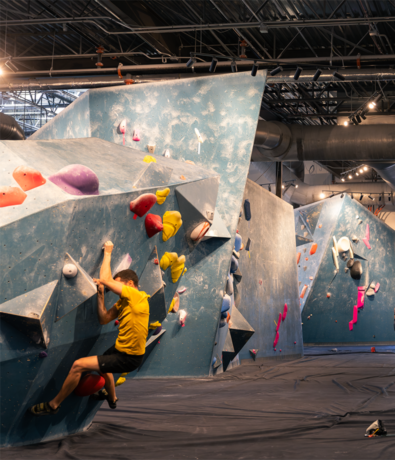
The most common types of indoor rock climbing are Bouldering and Rope Climbing. Both are great, but bouldering is more approachable for beginners, since you need less equipment and know-how. The easiest routes (called ‘problems’) are similar to a ladder with large, easy to grab holds. The design of the walls will challenge different muscle groups and skills and get you used to moving up and across the terrain.

Decoding the Colors: The Circuit System
Bouldering Project’s circuit system is inspired by Fountainebleau, France, the birthplace of bouldering. Instead of giving each climb an individual grade, each color corresponds to a range of difficulty, encouraging you to try different techniques and styles of climbing. Yellow climbs will be the easiest, and the red and green circuits will start to incorporate harder moves and types of holds.
Climbing Gym Etiquette
Just like any other sport, following basic etiquette ensures that everyone has a great session. Here are some ground rules to know:
- Mind the Fall Zones: What goes up must come down, so never walk, sit, or stand directly beneath someone on the wall. When in doubt, it never hurts to give your fellow climbers extra space.
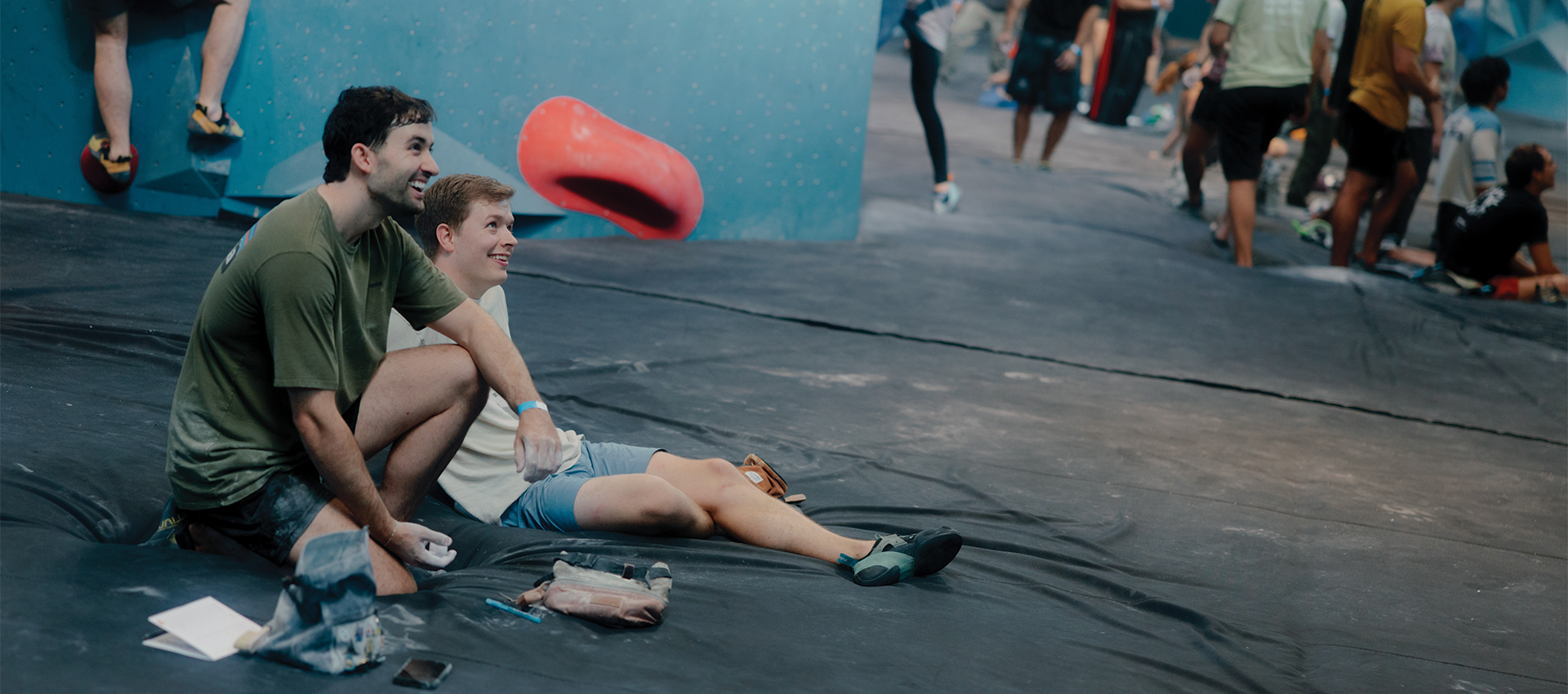
- Keep The Mats Clear: No one wants to land on a water bottle or a phone. Keep hard items off the mats and out of your pockets.
- Stay Observant: Take a quick look at your surroundings before each time you get on the wall. Keep an eye out for routes that cross or put you in another climber’s path, and make sure you’re giving other climbers a chance to try a specific problem. Whoever is already climbing typically gets the right of way.
Climbing Basics
There’s no wrong way to climb, but these are some simple techniques that can make your bouldering experience last longer and feel more enjoyable.
- Straighten Your Arms: A common mistake is to bend your arms like a t-rex. If you do this a lot, you’ll be too tired to continue after about 20 minutes. Keeping your arms straight and pushing with your legs is a foundational climbing technique and preserves energy.
- Plan Your Route: Before grabbing onto the start holds, take a step back and give the entire problem a scan. Planning your moves ahead of time, or sequencing, can help you move more efficiently on the wall.
- Learn To Fall: After you’ve finished a climb, use the gray downclimbing holds to lower yourself closer to the ground. The thick soft mats surrounding the bouldering area will soften your landing, but you’ll also want to land on your feet, tuck in your arms and chin, and roll back
Accelerating Your Growth With An Intro Class
You’ll learn a ton just by trying stuff out on the wall, but an Intro to Bouldering class will give you an even deeper foundation for your climbing journey. Our experienced instructors can give you real-time feedback and a low-pressure environment to learn basic climbing techniques.
Final Thoughts: Your New Third Spot
Indoor climbing is all about community, and it’s easy to make friends on the mat. Whether you’re climbing for the first time or you’ve logged 5,000 sessions, we’re all in pursuit of growing together on the wall.
The best way to get started with indoor climbing is to find a Bouldering Project near you and try it for yourself. Our staff are eager to answer any questions you may have or just make you feel more at home here. Your day pass or introductory class also gives you access to our fitness and yoga offerings, so come on in and stay a while.
About the author: Anne is the Social Media Coordinator at Bouldering Project Brooklyn. When she’s not working or climbing, she’s probably exploring swimming holes in the Hudson Valley or riding her bike around New York City.
How to Start Rock Climbing in Austin
Written by: Anne Riddle-Cruz Step Onto the Pads: How to Start Rock Climbing in Austin Austin is one of...
The Best Places to Go Rock Climbing in Austin
Written by: Anne Riddle-Cruz Central Texas Limestone: A Local’s Guide to Rock Climbing in Austin The city of Austin...

Bouldering Project’s Signature Yoga Classes
Written by: Kenzie Bicher Bend, Don’t break. Our yoga classes are designed for flexibility, mindfulness, and strength. Gradually...

The Functional Benefits of Pilates
Written by: Kenzie Bicher The Functional Benefits of Pilates Pilates is a buzzword that pops up everywhere. If you've...
Climbing Gyms vs. Traditional Gyms: Why Fitness is Shifting to the Pads
Written by: Anne Riddle-Cruz Rock climbing gyms have exploded in popularity over the last decade, not only because climbing...
Afraid of Falling? What Beginners Need to Know About Bouldering
Written by: Kenzie Bicher What about bouldering scares you? Heights. Not knowing what you're doing. Feeling unsure of yourself. Looking...