


Bouldering Walls Explained: Types, Features, and How to Use Them


Written by: Elise Rehberg
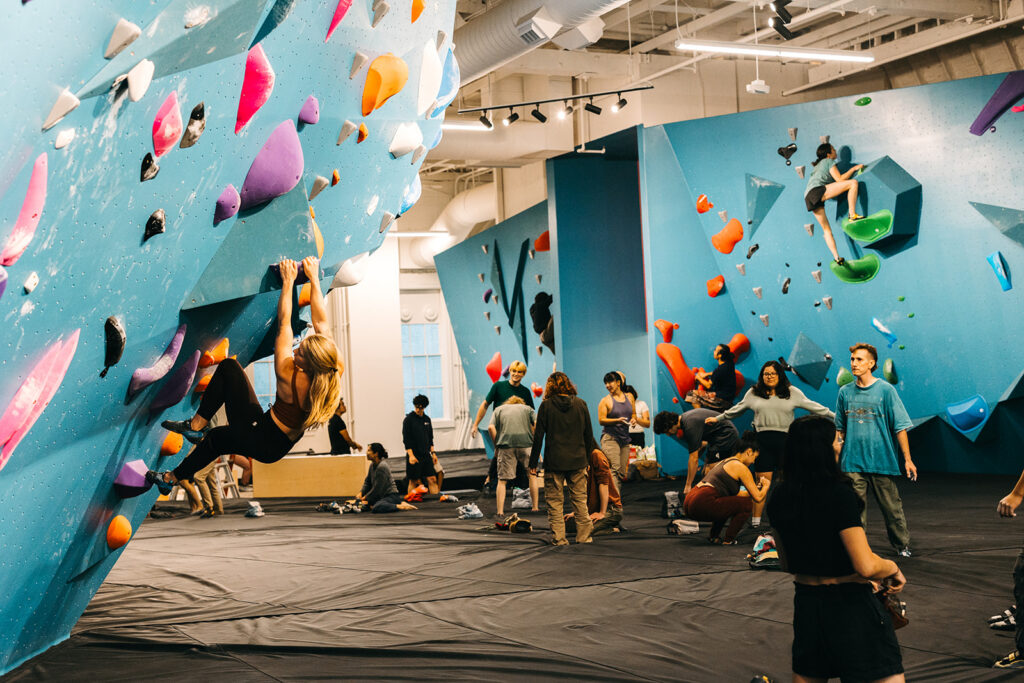
Inspired by natural rock walls, climbing gyms are purposeful movement playgrounds with endless opportunities to shape your experience, from training hard to connecting with your community.
We’re going to dive deep into bouldering walls here, but before we do, let’s unpack what makes bouldering its own branch of climbing.
The 2 Main Types of Gym Climbing
Roped climbing: Significantly tall climbing walls requiring gear to catch falls, usually 30-60 feet in height depending on the building. A climber ties into a rope, while a belayer manages the rope system. The rope runs through points of protection on the wall. If the climber falls, the belayer and rope system catches them in the air.
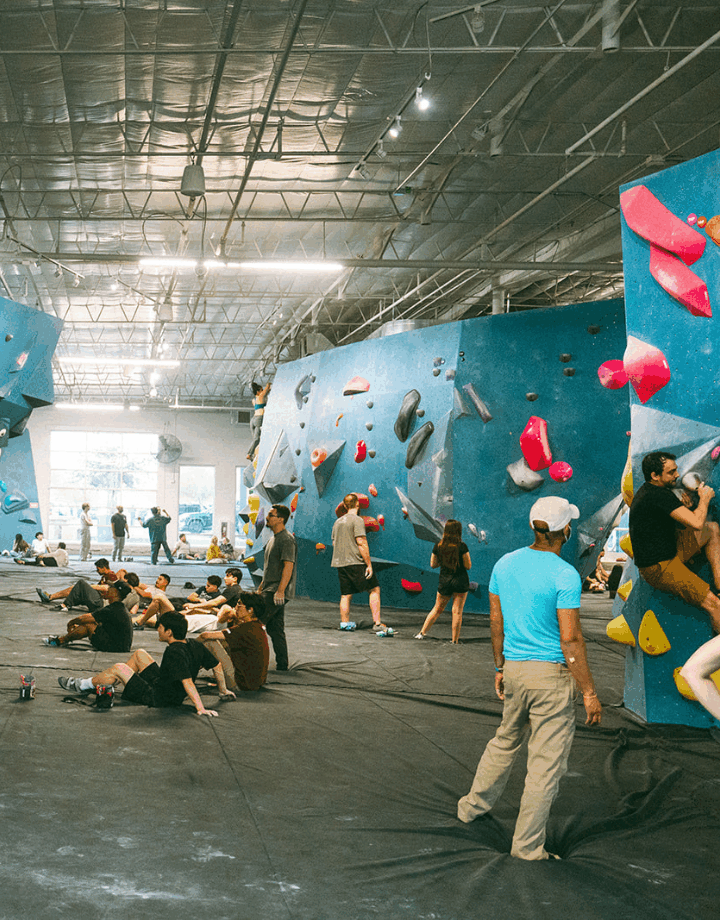
Bouldering: Shorter walls typically reaching 10-15 feet in height. Thick cushioned mats cover the surrounding ground, so ropes are not needed. Bouldering maintains its challenge through powerful, precise, and tricky movement.
It Starts With Wall Construction:
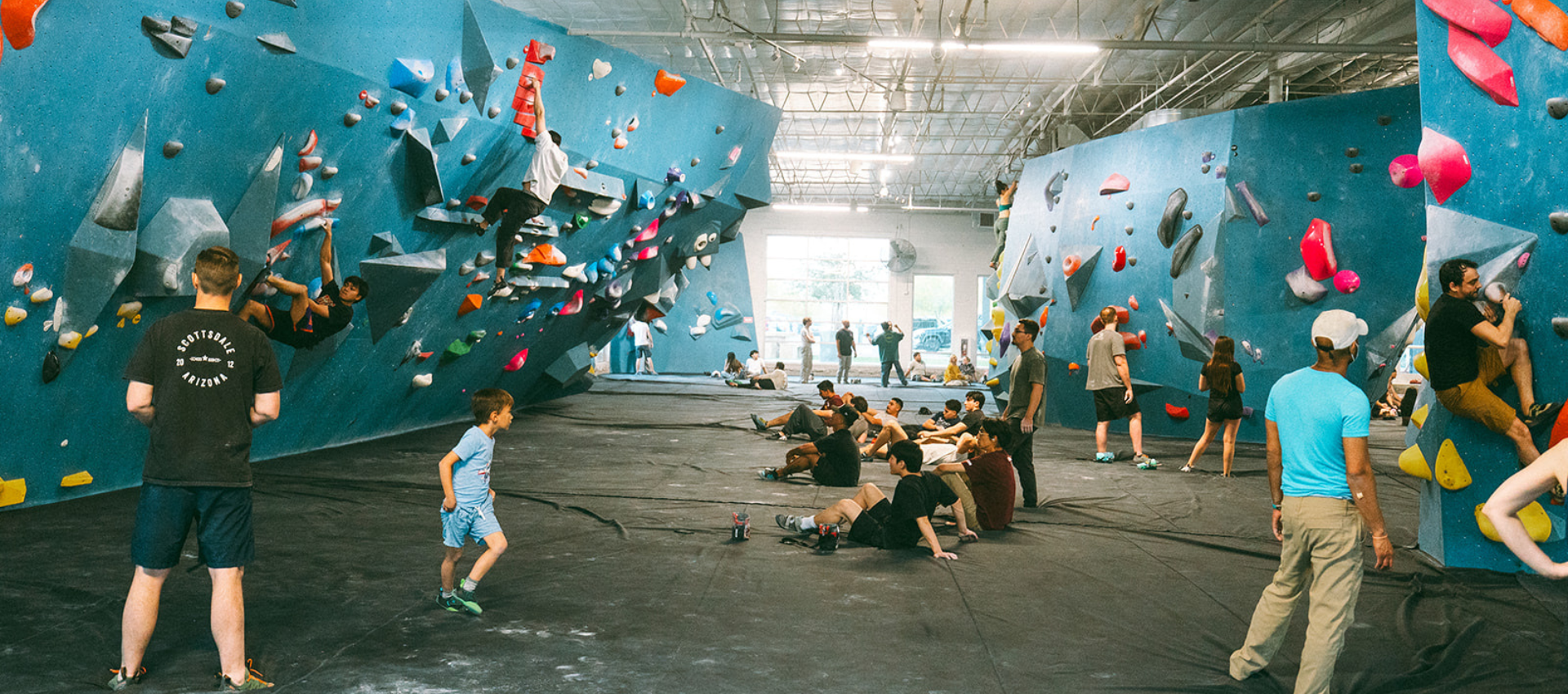
Bouldering Project constructs our own climbing walls (which is unusual – most climbing gyms buy prefabricated walls), designing a varied climbing experience through four common climbing wall angles:
- Vertical: Relatively straight up and down, climbers utilize strength and technique abilities.
- Overhang: Leans at an angle steeper than vertical, adds an increased need for body tension and power.
- Roof: Steepest wall angle, often nearing horizontal – calls for controlled core strength and increased pulling footwork.
- Slab: Gentle angle that leans slightly away, taps into balance and precise footwork.

Features of a Wall:
Volumes: Features added to the wall acting as an extension of the wall
- Volumes alter wall dimensions and are often large and geometric.
- Are not associated with a specific color route or circuit, can be used on any route.
Top out Boulders: Bouldering walls requiring climbers to climb on top of the boulder structure to complete the route (rather than grabbing a designated finish hold on the wall).
The Routesetters Make It Happen:
Routes (also known as “problems”) are the climbing paths up the wall, and are typically identified by a series of same colored holds (the colored grips on the wall).
The routesetters are the rad people putting up holds and features to create routes!
Routesetters strategically use a variety of holds to create unique routes and challenges for climbers.
The Grading System Defines Route Difficulty:
Bouldering in the US uses the V-Scale, currently spanning V0 to V17.
- Think of V0 as similar to a creative ladder!
- Bouldering is challenge-by-choice, offering introductory and pro-level routes to meet you where you’re at.
Gyms often label each climb with a grade, or may establish a circuit to correlate route colors to grades. Learn more about climbing grades through this climbing grade guide.
What Is a Spray Wall and How Can You Use It?
Spray walls are training walls filled with holds of all colors, shapes, and sizes.
There are no defined routes, usually set with a higher density of holds covering the wall.
Climbers choose holds on the wall to build unique routes and train targeted climbing skills, such as:
- Finger and muscle strength
- Endurance
- Power
- Coordination
- Grip positions
- Understanding of movement.
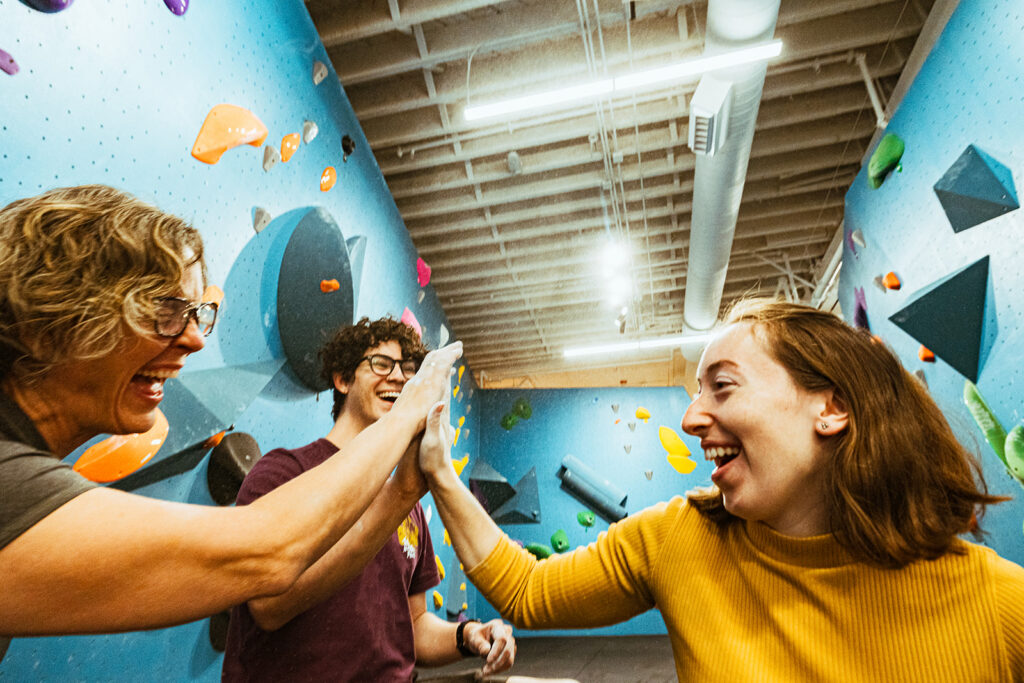
Find Your Climbing Crew
The best way to grow as a climber is to climb with the community around you!
We share ideas, give encouragement, appreciate challenges, and celebrate wins.
Want more climbing instruction to progress your skills?
- Check out our climbing classes led by knowledgeable coaches
Have a kid climbing every tree they see?
- Enroll them in a bouldering youth program to learn about the sport
Want to find a climbing crew?
Check out our events calendar for community events at Bouldering Project
Climbing and Community: The Boston Indoor Climbing Scene
Written by: Anne Riddle-Cruz Analog Connections: Boston’s Indoor Climbing Scene Boston knows a thing or two about athletic excellence. Climbing...
A Beginners Guide to Mat Pilates
Written by: Kenzie Bicher In our last post, we talked about the benefits of a consistent Pilates practice. Now...
How to Start Rock Climbing in Austin
Written by: Anne Riddle-Cruz Step Onto the Pads: How to Start Rock Climbing in Austin Austin is one of...
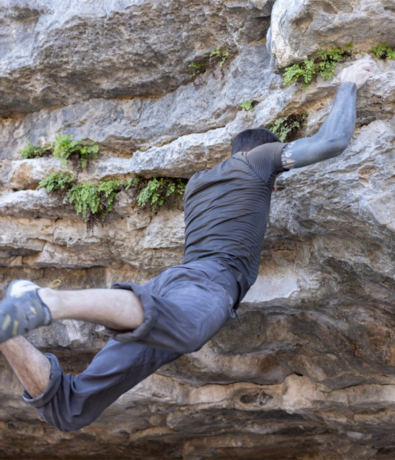
The Best Places to Go Rock Climbing in Austin
Written by: Anne Riddle-Cruz Central Texas Limestone: A Local’s Guide to Rock Climbing in Austin The city of Austin...
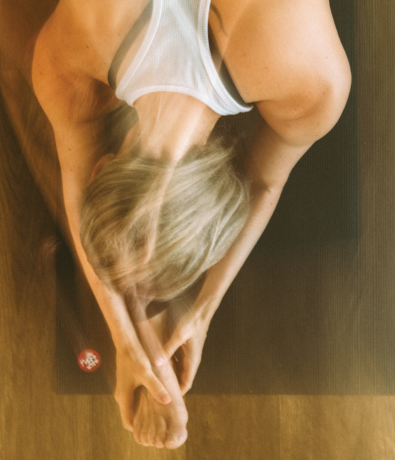
Bouldering Project’s Signature Yoga Classes
Written by: Kenzie Bicher Bend, Don’t break. Our yoga classes are designed for flexibility, mindfulness, and strength. Gradually...

The Functional Benefits of Pilates
Written by: Kenzie Bicher The Functional Benefits of Pilates Pilates is a buzzword that pops up everywhere. If you've...