


Bouldering vs Rope Climbing: What’s the Difference?


Written by: Anne Riddle-Cruz
It’s a classic debate: What’s the best way to rock climb?
There’s lots to consider when you’re choosing between Bouldering and Rope Climbing. Spoiler, it’s less about the best way to climb and more about what makes the most sense for you.
Two Paths to the Vertical
The goal in both Bouldering and Rope Climbing is to ascend the wall. The difference lies in how.
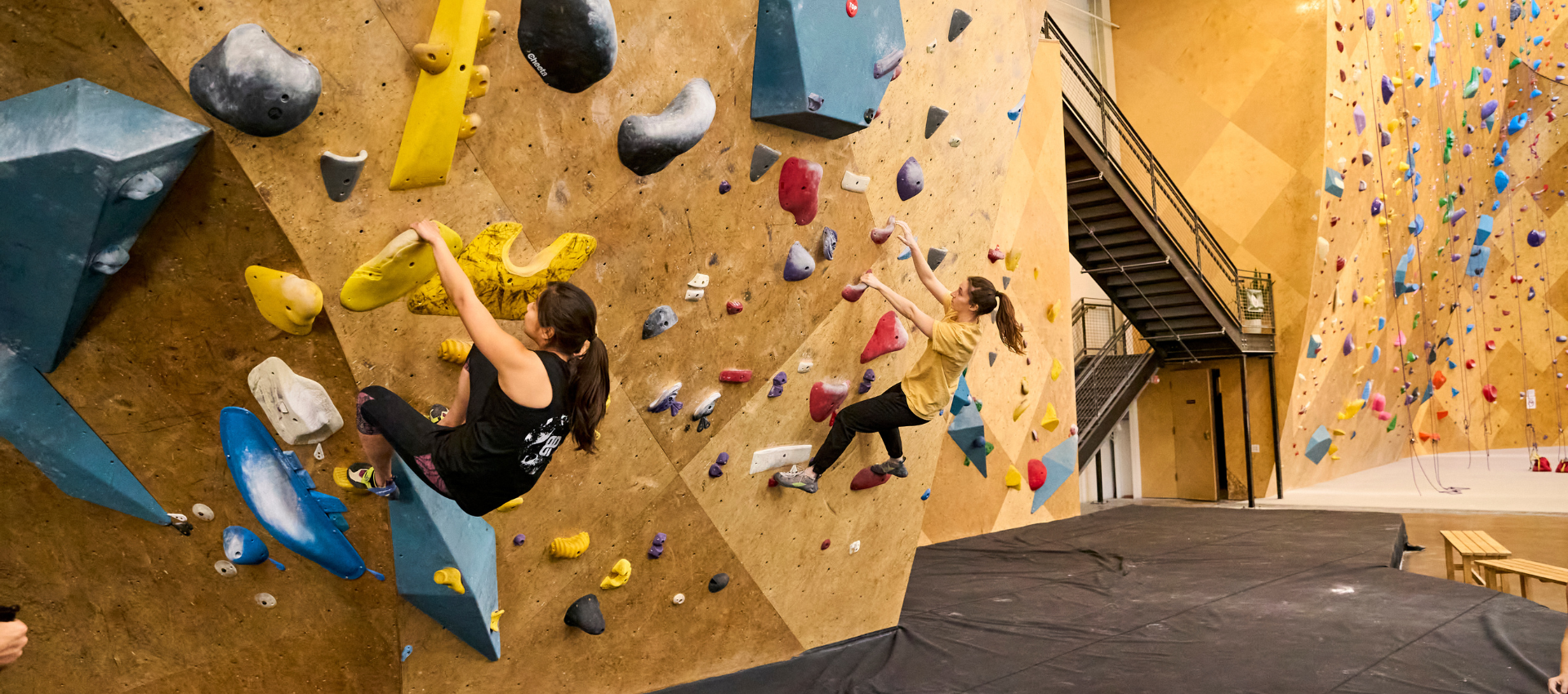
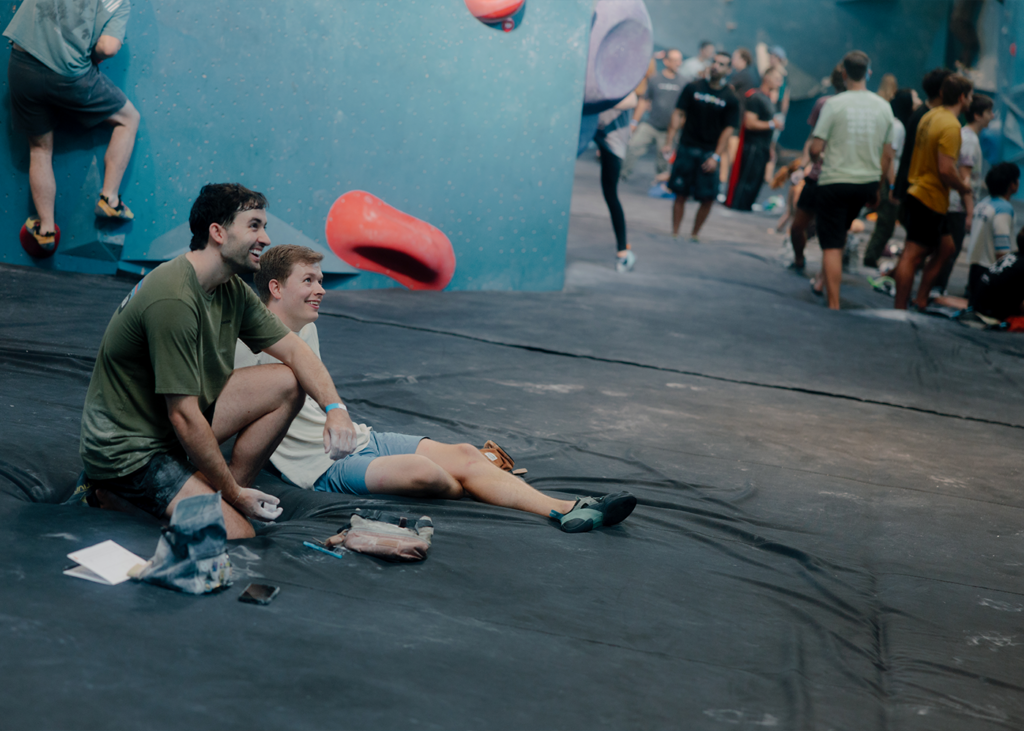
Bouldering uses shorter walls surrounded by thick, soft mats. The pads cushion any falls, so there’s no need for ropes or other complicated equipment systems. After a while, falling starts to feel as natural as climbing, and some prefer the freedom of climbing without being restricted by a rope or a harness. Bouldering can be a solo activity, though it’s always fun with a crew.
Rope climbing uses, well, ropes to ascend larger walls, typically upwards of 30 feet tall. This style of climbing requires specialized equipment like harnesses and belay devices, plus a partner (called a belayer) to manage the rope system. The climber’s falls are caught by the belayer and the rope in the air, instead of on the ground by a soft landing.
The Mechanics of the Move
Height isn’t the only difference between bouldering and rope climbing. Short walls encourage puzzle-like problem solving and bursts of strength, while roped climbs challenge your endurance.
Bouldering: Short, Intense, and Social
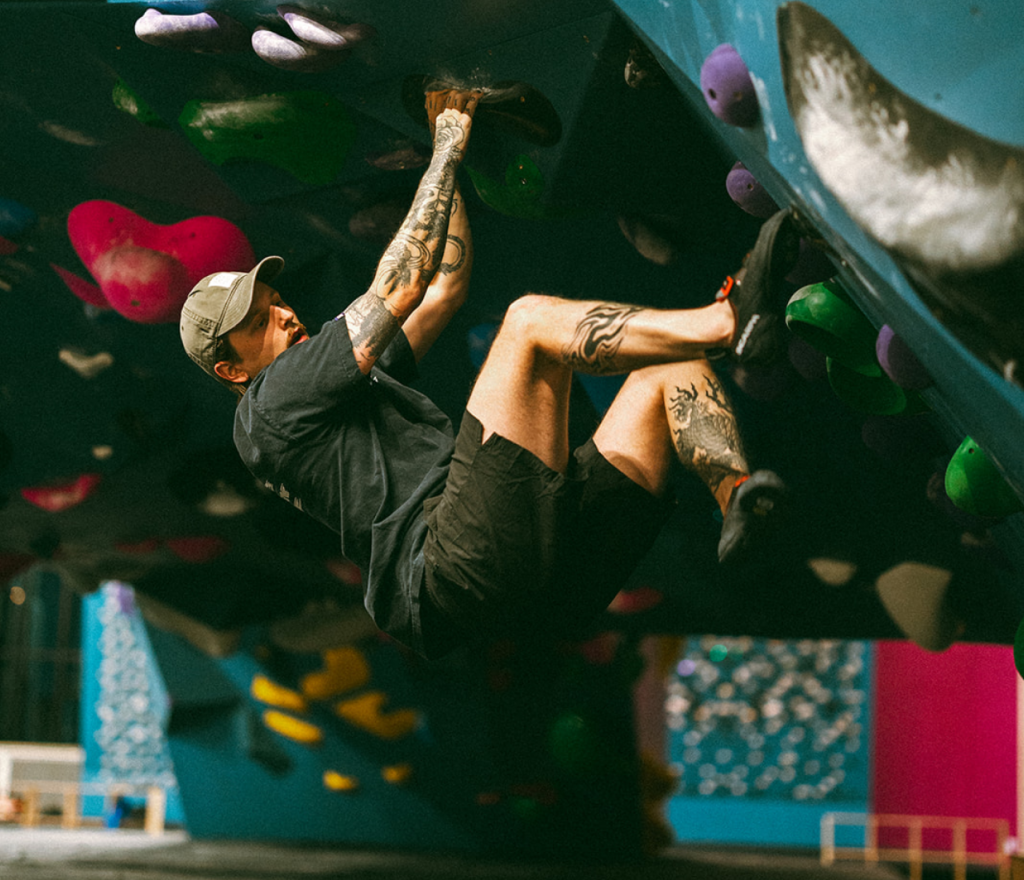
Bouldering is all about testing your strengths within a short climb. At Bouldering Project, we use a Circuit System that encourages experimentation with different styles of movement. Think of bouldering as difficult play; each problem is designed to be solved with a unique combination of strength, coordination and technique. Bouldering’s simple setup also means you can show up on your own or with friends. More often than not, we make connections with someone on the wall while working on the same problem together.
Rope Climbing: Endurance and Systems
There’s a bit more technical equipment and know-how required to get started rope climbing. You and a belay partner will need harnesses, rope, and a belay device to manage the rope system as you climb up the wall. (Some gyms do offer auto belays, which means you don’t need a belay partner, but you still need a harness). Rope climbing on taller walls is much more a game of endurance, focusing on sustained movement as opposed to Bouldering’s combination of power and problem solving.
Why Bouldering is the Ultimate Entry Point
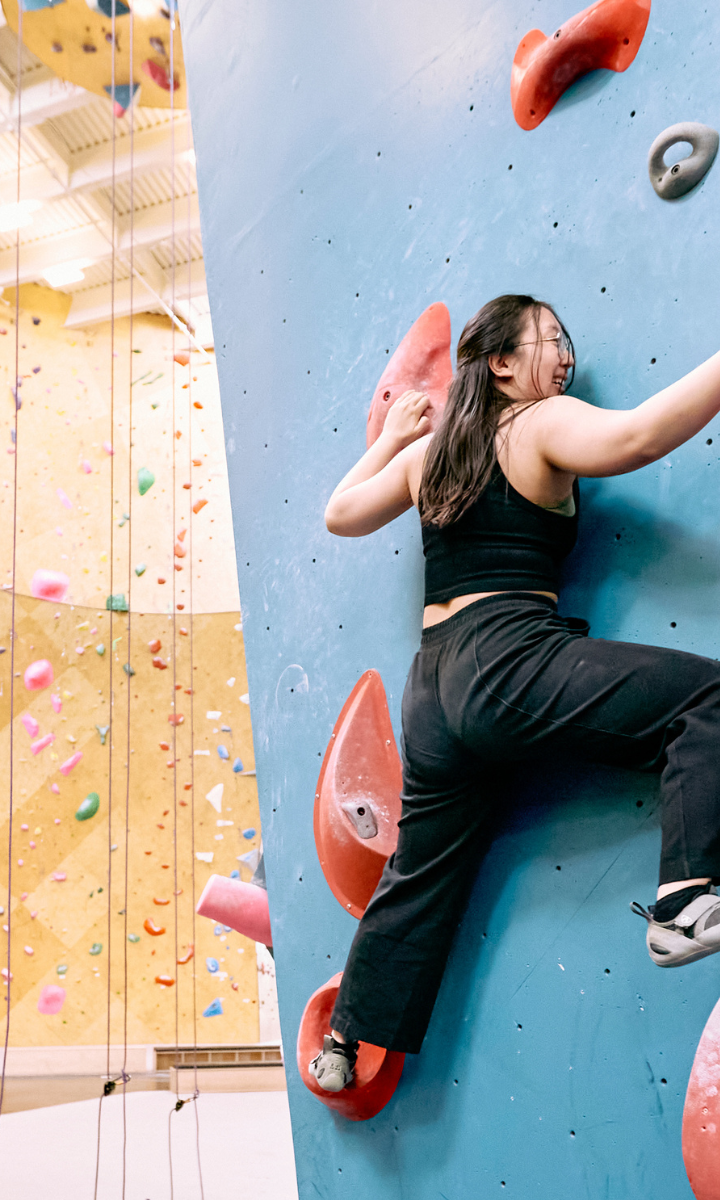
Bouldering doesn’t require you to know how to tie specific knots or to buy a (potentially expensive) harness. All you need to get started are climbing shoes and a chalk bag—both of which you can rent from any Bouldering Project location. This low barrier to entry makes Bouldering great for beginners.
There are some exceptions: rope climbing can be more accessible and comfortable to those with disabilities and for those who are afraid of taking falls onto the bouldering pads.
Equipment and Gear: What You Actually Need
The list of equipment you need is pretty short for Bouldering. Plus, Bouldering Project provides rentals to make getting started even more hassle-free:
- Climbing shoes: Specialized footwear with rubber soles to help your feet stick to the wall.
- Chalk bag: While not a necessity, many climbers use chalk to absorb the sweat from their hands and maintain their grip on the wall.
For rope climbing, you’ll need a few more things. For most types of rope climbing, you’ll also need a belay partner, along with their own set of equipment:
- Climbing Harness: Made from durable webbing, this is worn over your hips and legs and secures you to the rope system.
- Belay Device: These mechanical devices vary, but they all create friction in the rope system to control any falls and manage your descent when you’re done.
Finding Your Flow at Bouldering Project
Still not sure where to start? Our Intro to Bouldering Project class sets you up for future success on the wall. Guided instruction will help you get you comfortable navigating our spaces and tackling your first climbs and falls. Our Boston location is unique in that it offers both bouldering and rope climbing, and you can take a Learn the Ropes class if you want to learn more about belaying and rope systems. These classes are free with a Bouldering Project membership, making it even easier to start your climbing journey.
Final Thoughts: Choosing Your Adventure
There is no one-size-fits-all approach to climbing. Some people love the physical and mental challenge Bouldering presents, others prefer longer, meditative climbs on ropes. Consider whether you want to have an approachable, social experience with minimal equipment, or if the investment in rope climbing-specific skills and equipment are worth it to take on new heights.
See for yourself whether Bouldering or Rope Climbing are right for you by taking one of our climbing classes or by checking us out with a day pass.
About the author: Anne is the Social Media Coordinator at Bouldering Project Brooklyn. When she’s not working or climbing, she’s probably exploring swimming holes in the Hudson Valley or riding her bike around New York City.
Climbing and Community: The Boston Indoor Climbing Scene
Written by: Anne Riddle-Cruz Analog Connections: Boston’s Indoor Climbing Scene Boston knows a thing or two about athletic excellence. Climbing...
A Beginners Guide to Mat Pilates
Written by: Kenzie Bicher In our last post, we talked about the benefits of a consistent Pilates practice. Now...
How to Start Rock Climbing in Austin
Written by: Anne Riddle-Cruz Step Onto the Pads: How to Start Rock Climbing in Austin Austin is one of...
The Best Places to Go Rock Climbing in Austin
Written by: Anne Riddle-Cruz Central Texas Limestone: A Local’s Guide to Rock Climbing in Austin The city of Austin...
Bouldering Project’s Signature Yoga Classes
Written by: Kenzie Bicher Bend, Don’t break. Our yoga classes are designed for flexibility, mindfulness, and strength. Gradually...
The Functional Benefits of Pilates
Written by: Kenzie Bicher The Functional Benefits of Pilates Pilates is a buzzword that pops up everywhere. If you've...